


Unravelling the Shadows: The Chilling Tale of Constance Kent and Victorian Crime
- Cailynn Brawffe

- Dec 8, 2025
- 5 min read

Victorian England loved its secrets. Behind heavy drapes and respectable façades, lives were lived in quiet repression, swirling emotion, and the occasional scandal too big for any era to swallow. But few cases pierced the polite veneer of the 19th century as violently as the murder of little Francis Saville Kent, a crime so shocking it birthed national outrage, derailed a detective’s career, and left behind a mystery still debated more than 160 years later.
Welcome to Macabre Monday, where today we open the doors of Road Hill House and step into one of the most chilling true-crime stories of the Victorian era — the case of Constance Kent.
A murder that shocked a nation.
A confession that arrived five years too late.
And a truth that still refuses to settle quietly into history.
The Kent Family: Respectable on the Surface, Rotting Beneath
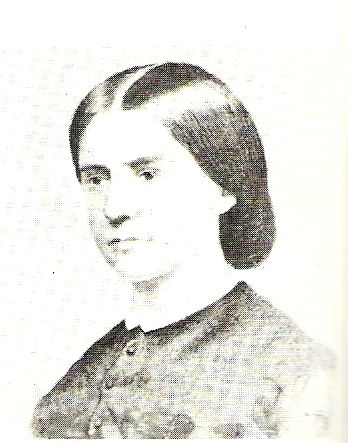
The Kent family looked perfectly ordinary — at least from the outside. Samuel Kent, a government factory inspector, had money, status, and a large blended household courtesy of a first marriage, a second wife, and an ever-growing number of children.
But within the walls of Road Hill House, tensions simmered:
Constance and her brother William were said to be unhappy, mistreated, and resentful under their stepmother Mary Kent’s strict authority.
Rumours of Samuel Kent’s past infidelities and questionable conduct quietly circulated.
The older children were pushed aside as new half-siblings arrived.
Servants whispered about locked doors, cold silences, and favouritism.
In an era obsessed with propriety, everything unpleasant was tidily swept under rugs. But repression, as we know, breeds pressure — and pressure finds its way out.
The Murder of Francis Saville Kent
On June 29, 1860, the Kent household awoke to a nightmare. Three-year-old Francis Saville Kent was missing from his crib. A frantic search followed, and the worst possible discovery soon emerged.
Francis’ small body lay in the estate’s outdoor privy, throat cut so savagely it nearly severed his head. He had been stuffed into the hole, as if his killer hoped the darkness would keep the secret forever.
Road Hill House — already strained with private turmoil — became a public spectacle overnight.
Victorian England was enthralled and horrified. Newspapers splashed headlines across the country. How could such a crime happen in a respectable upper-middle-class home? Suspicion quickly narrowed: it must have been someone inside the house. But the police hesitated, slowed by class biases and the fear of accusing “proper” citizens.
The Kent family, once private, now lived under a magnifying glass.
Enter Inspector Jack Whicher — The Detective Who Knew Too Much

To solve the crime, Scotland Yard dispatched one of its finest: Inspector Jack Whicher, a pioneer of modern detective work. A brilliant investigator, Whicher immediately zeroed in on something local authorities had overlooked: a missing nightgown belonging to 16-year-old Constance Kent.
Whicher suspected that Constance:
Had a motive, rooted in resentment toward her stepmother
Had lied about her movements
May have enlisted her brother William’s help
Destroyed the nightgown used during the crime
Whicher's accusation struck Victorian society like lightning. A young lady of status? A murderer? The audacity offended the public’s sensibilities. The press and London society turned on him, attacking his character and professionalism.
Despite compelling clues, the case fell apart. Constance could not be formally charged, and the scandal forced Whicher into early retirement. He was right, people believed — but the truth was too “inconvenient” to accept.
The case went cold. But not forever.
A Confession… Five Years Later
In 1865, the nation gasped once more.
Out of nowhere, Constance Kent confessed to the murder.
Now 21 years old and living at a religious retreat in Brighton, she told Reverend Arthur Wagner she had killed her little half-brother alone. The story was simple, stark, and lacking detail. She offered no insight into why she did it beyond vague references to jealousy and anger.
Her confession was enough. She was arrested, tried, and sentenced to life in prison — later commuted to 20 years for “good behaviour.”
But here is where the story becomes even stranger:
Was Constance Kent telling the truth?
Many believed she was protecting someone — most likely her brother William, rumoured to be unstable and closer to the crime than anyone admitted. Others suspected Constance acted under psychological pressure from the religious community. Some said her confession was a form of self-punishment for trauma deeper than the public knew.
Even today, scholars argue the confession was:
incomplete
inconsistent
strategically vague
possibly false
Constance Kent served her time, immigrated to Australia, became a nurse, and lived to the age of 100 — dying in 1944 with her secrets intact.
The Theories That Won’t Die
More than a century later, the Constance Kent case remains a favourite for true-crime historians because it is rich with unanswered questions. Here are the leading theories:
1. Constance acted alone
The simplest explanation. Supporters cite jealousy and emotional instability, combined with resentment toward her stepmother.
2. Constance and William committed the murder together
One of the most widely accepted theories. William’s behaviour, temperament, and timeline inconsistencies suggest involvement. Constance may have confessed to protect him.
3. Samuel Kent, the father, was involved or complicit
Some suspected he may have had a darker role — or at least helped orchestrate a cover-up. After all, a second scandal would ruin his career.
4. The confession was coerced or influenced
Constance’s years in religious confinement may have primed her for guilt, redemption, or penitence — leading her to take responsibility for a crime she did not, or did not entirely, commit.
5. Inspector Whicher was right… but the Victorian class system wouldn't allow the truth
Whicher’s professional ruin became a cautionary tale. But history has largely vindicated him.
The case remains haunted not only by a murder, but by the silence surrounding it.
Legacy of a Victorian Horror
The murder at Road Hill House didn’t just grip the nation — it left a permanent mark on culture:
It inspired Wilkie Collins’ The Moonstone, sometimes called the first modern detective novel.
Charles Dickens followed the case obsessively.
It reshaped investigative standards in homicide cases.
It solidified the idea of the detective as a cultural figure — flawed, scrutinised, and often underappreciated.
It continues to fascinate modern true-crime readers for its eerie psychological complexity.
Constance Kent may have confessed, but she never explained. She locked the truth away behind Victorian propriety and carried it across continents and decades.
The silence remains louder than the confession.
Final Thoughts
The Case of Constance Kent endures because it refuses to give us a clean ending. It is a story about:
A child’s brutal death
A fractured family
A detective destroyed for telling an uncomfortable truth
A confession that answered little
A woman who lived a long, quiet life with unimaginable secrets
In the end, the real question is not Who killed Francis Saville Kent? It is: Did Constance Kent take the truth to her grave — or did she give us the truth no one wanted to believe?
Either way, the ghost of Road Hill House still lingers in the shadows of true crime.
What’s your theory on the Kent case?
Was Constance the killer, the scapegoat, or the protector of a darker family secret?


Comments