


The Greenbrier Ghost: How Zona Heaster Shue’s Spirit Solved a Paranormal Murder Case
- Cailynn Brawffe

- Dec 1, 2025
- 5 min read

“They said she died of natural causes, maybe a miscarriage. But her ghost said otherwise.”
On a cold day in January 1897, a young woman named Zona Heaster Shue was found dead at the foot of the stairs in her Greenbrier County, West Virginia home. The death was quickly ruled natural — a case closed without an autopsy, without suspicion, and without justice.
But death, in this story, was not the end.
What followed became one of the most bizarre murder cases in American history — not for how the crime was committed, but for how it was solved: by the victim’s ghost.
This is the true tale of The Greenbrier Ghost — a story that sits at the crossroads of Appalachian folklore, supernatural belief, and the American justice system. A murder case where a ghost didn’t just haunt… she testified.
Zona Heaster: A Life Cut Short

Elva Zona Heaster, known simply as Zona, was 23 when she met a handsome blacksmith named Edward Stribbling Trout Shue. He had recently arrived in the small community of Greenbrier, West Virginia, and quickly swept Zona off her feet.
They married in October 1896 — a whirlwind romance that made Zona’s mother, Mary Jane Heaster, deeply uneasy. There was something about Shue she didn’t trust. She called it a gut feeling. Others would later call it a warning sign.
Just three months into the marriage, on January 23, 1897, Zona was discovered dead in her home by a neighbour boy sent on an errand. She was lying at the bottom of the stairs, her body eerily arranged, and her eyes wide open.
Dr. George Knapp, the local physician, arrived but barely examined her. Shue insisted she had died from “everlasting faint” — a vague Victorian euphemism that sometimes meant heart failure, sometimes hysteria. Rumours later suggested someone whispered “childbirth complications,” though Zona was never known to be pregnant.
Zona was buried the very next day.
Just like that — the tragedy was over.
But Mary Jane Heaster wasn’t buying it.
The Greenbrier Ghost Who Wouldn’t Stay Silent
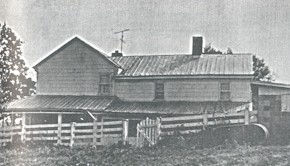
In the weeks following her daughter’s burial, Mary Jane became consumed with suspicion. Why had Shue been so controlling during the funeral? Why had he dressed Zona himself in a high-collared gown and tied a scarf around her neck? Why had no real autopsy been performed?
Mary Jane began to pray for answers.
And then, the answers came — from the other side.
Over four nights, Zona’s ghost appeared to her mother. Each night, she told her the same horrifying truth: She had been murdered. According to the spirit, Shue flew into a rage one evening after she told him she hadn’t cooked any meat for dinner. He strangled her, crushing her windpipe and breaking her neck. On one night, the ghost even turned her head completely backward, showing the damage done.
Mary Jane didn’t just believe her daughter — she acted.
From Séance to Courtroom
Mary Jane Heaster marched to the office of local prosecutor John Alfred Preston and told him everything. Whether Preston believed in ghosts or not, he was swayed enough to reinterview key witnesses — including Dr. Knapp, who admitted he hadn’t thoroughly examined the body at all.
That was all the opening Preston needed.
Zona’s body was exhumed on February 22, 1897, and an official autopsy was performed in a local one-room schoolhouse. The results were chillingly consistent with the ghost’s accusations:
The neck was broken between the first and second vertebrae
The windpipe was crushed
Ligaments were torn and ruptured
There were finger-shaped bruises on the neck
Zona had not died of natural causes. She had been murdered.
A Husband with Secrets
Edward Shue was immediately arrested and held in jail in Lewisburg to await trial. As investigators dug deeper into his past, his disturbing history unravelled.
His first wife had divorced him, citing cruelty and abuse
His second wife had died under suspicious circumstances
He openly told others he hoped to marry seven women in his lifetime
Zona was wife number three. And while in jail, Shue seemed shockingly confident he would be set free, telling reporters there wasn’t enough evidence against him.
He hadn’t counted on Zona's ghost.
The Trial of the Century (Sort Of)
The trial began on June 22, 1897, and quickly drew widespread attention. Though prosecutors based their case entirely on physical evidence and witness testimony, it was clear the spectre of the ghost loomed large in the courtroom.
Mary Jane Heaster took the stand as the prosecution’s key witness, though prosecutor Preston avoided any direct mention of the supernatural. The real twist came when the defence, trying to discredit her, grilled her about the ghostly visitations.
That plan backfired spectacularly.
Mary Jane never wavered. Her account of the ghost’s appearance was detailed, consistent, and delivered with unwavering conviction. Her sincerity, paired with the confirmed autopsy findings, was enough to sway the jury — even if the ghost wasn’t officially mentioned in the judge’s instructions.
On July 11, 1897, Edward Shue was found guilty of murder and sentenced to life in prison.
Aftermath & Legacy
Shue died just three years later, on March 13, 1900, in the West Virginia State Penitentiary — reportedly from an epidemic. He was buried in an unmarked grave, forgotten by history.
But Zona was never forgotten.
The Greenbrier Ghost case became a legend — the only documented case in U.S. history where a ghost’s testimony helped convict a murderer. It has inspired:
Books and documentaries
Podcasts and paranormal shows
A permanent place in West Virginia folklore
Ghost tours and true crime features

Zona’s grave marker still stands in Soule Chapel Methodist Cemetery, and a state historical marker at the site reads:
“Interred in nearby cemetery is Zona Heaster Shue. Her death in 1897 was presumed natural until her spirit appeared to her mother to describe how she was killed by her husband, Edward. Autopsy on the exhumed body verified the apparition’s account. Edward was found guilty of murder and sentenced to the state prison. Only known case in which testimony from ghost helped convict a murderer.”
Why This Story Still Haunts
The Greenbrier Ghost resonates because it merges myth with reality, folklore with legal precedent, and the personal with the paranormal.
It forces us to ask:
How much does belief influence truth?
Can grief open doors to things we can’t explain?
And what happens when justice requires something… otherworldly?
In a time and place where women’s voices were often silenced, Zona Heaster’s story rose from the grave and demanded to be heard.
Final Thoughts for Macabre Monday
Whether you believe in ghosts or not, the Greenbrier case stands as a reminder that justice has many forms — and sometimes, it wears a white dress, glows in the night, and turns its head to show you what really happened.
Zona Heaster Shue was buried twice — once by earth, and once by assumption. Only after death did she get to speak.
And when she did, the world listened.
What Do You Think?
Could a ghost solve a crime today? Would you believe a vision from the beyond if it revealed the truth? Or is this just folklore wrapped in a courtroom drama?
Until next time:
Listen to the dead. They might have something important to say.


Comments