How to Turn Ordinary Things into Emotional Horror in Your Story
- Cailynn Brawffe

- Jun 18, 2025
- 2 min read
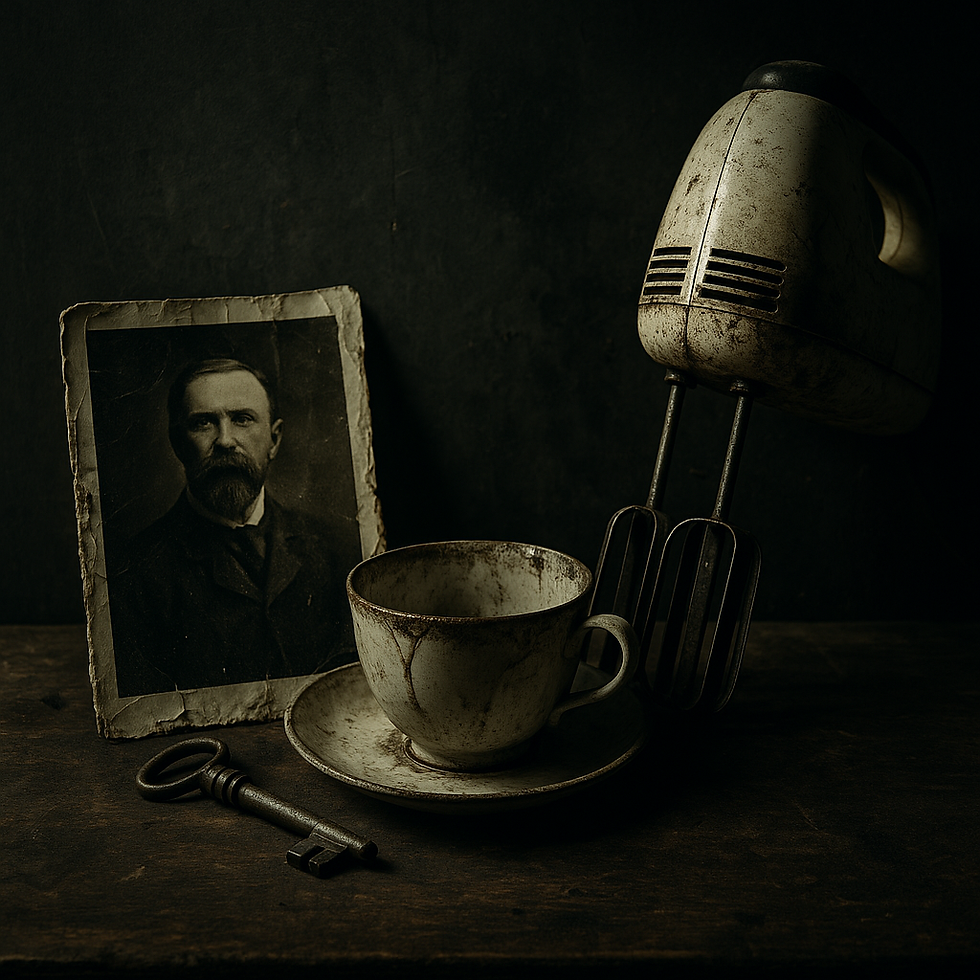
Sometimes, it’s not the ghost that gets you.
It’s the teacup.
The hairbrush.
The hand mixer your mother used when she was still alive—barely.
In horror, objects aren’t just set dressing. They’re loaded weapons—emotional grenades with the pin already halfway out. And if you’re a horror writer looking to dig under your readers’ skin, it’s time to stop thinking of things as… well, just things.
Let’s talk about how to use everyday items to curse, scar, and emotionally destabilize your characters—and maybe your readers too.
👁️ Why Use Objects in Horror Fiction?
Because a butcher knife is obvious.
But a cracked photo frame of a sibling no one remembers? That’s personal.
Great horror isn’t always loud. It’s intimate. And small objects—those everyday, too-familiar items—carry emotional weight. In the right hands, they don’t need to levitate or whisper to be terrifying. They just need to exist in the wrong moment.
🔮 Objects Are Perfect For:
Representing unresolved grief, guilt, or shame
Reflecting inner character fears
Building an uncanny atmosphere (with a side of dread)
Acting as emotional anchors—or emotional landmines
🕯️ Famous (and Infamous) Examples
Let’s take a creepy walk down the dark aisle of horror history:
The Silent Companions by Laura Purcell – Disturbing wooden figures that may (or may not) move.
Hereditary (film) – A necklace that connects generations of… let’s say, highly dysfunctional women.
The common thread? None of these items start evil. They just… become it. Like grief, or regret, or inherited trauma. You know, the usual.
🗝️ How to Write Horror Objects That Actually Matter
Here’s your quick-and-creepy checklist:
1. Give the Object Emotional History
Ask yourself: Why does this item matter to the character?
Was it a gift? An heirloom? Something stolen?
Bonus points if it belonged to someone they’d rather forget.
2. Make the Reader Question What’s Haunted—The Object or the Owner?
Let the object act weird. Not too weird—just off.
Let the character react weirdly too.
Maybe it does move. Or maybe they’re just sleep-deprived and sad. (Both are best.)
3. Tie It to Theme
If your story’s about control, maybe the object is a clock.
If it’s about memory, maybe it’s a locket with something missing.
If it’s about inherited trauma… may I interest you in a hand mixer?
✍️ Writing Prompt: Let the Object Speak (But Quietly)
Write a scene where your character interacts with a completely normal item—a ring, a photo, a child’s toy—but make it feel deeply wrong.
You’re not allowed to say it’s cursed. You’re not even allowed to hint that it’s supernatural.
Let the emotional tension do the work:
A sound that won’t stop
A weight that feels too heavy
A memory they didn’t mean to unlock
Let the reader lean in, waiting for something to happen—because that’s when horror works best.
💬 What’s Lurking in Your Junk Drawer?
Time to share. What’s the most haunting object you’ve ever written (or read) into a horror story?
🧠 Bonus round:
What’s an everyday object that creeps you out—and why?
Let’s build a little museum of cursed curiosities together. I’ll bring the broken mirror and the candle that smells like regret.
🖋️ Final Thought:
Some ghosts moan.
Others just sit quietly on your shelf… waiting to be remembered.
Use them wisely.


Comments