


Exploring The Dark Secrets of The Poison Garden by Alex Marwood


There are books that frighten you because of what lurks in the dark — and then there are books that terrify you because of what grows quietly in the human mind.
Alex Marwood’s The Poison Garden (2019) belongs to the latter.
A grim, meticulously researched psychological thriller, it explores the wreckage left behind after a cult’s collapse — not just the physical aftermath, but the psychic scars that linger long after the poison has seeped into the soil.
This is not a book of “feel-goods.” It’s noir in the truest sense: no heroes, no redemption, and no easy catharsis.
Instead, Marwood examines how belief reconfigures the brain — how indoctrination becomes a second skeleton, one that doesn’t dissolve even when the body of the faith is gone.
Marwood’s horror is quiet. It doesn’t chase you — it follows you home.
The Story – The Aftermath of “The Ark”
The novel opens with horror already complete.
At Plas Golau, an isolated farm in North Wales, police discover nearly one hundred bodies — men, women, and children — dead from poisoning. They were members of The Ark, a survivalist doomsday cult led by the charismatic and tyrannical Lucien (or “Father”).
Among the dead is one survivor: Romy, twenty-one, heavily pregnant, and absolutely convinced that her unborn child is “The One” — the chosen saviour destined to rebuild humanity after the apocalypse.
To Romy, the outside world is not salvation. It’s “The Dead” — a place of corruption, chemicals, and sin. She’s thrust into modern society, but is utterly unprepared for it. Supermarkets, social workers, and television feel like proof of prophecy fulfilled.
Meanwhile, two other survivors — children named Eden and Ilo — are placed in the care of their estranged aunt Sarah, a woman struggling with her own religious trauma and failed marriage. As Sarah opens her home, she quickly realises the children are not simply frightened — they are dangerous.
When belief rewires the mind, freedom looks like sin.
Flashbacks – Life Inside the Compound
The story unfolds through two timelines: Romy’s past inside the Ark, and Sarah’s present, trying to reintroduce her niece and nephews to the world beyond their indoctrination.
In the flashbacks, we see how the cult formed — through Lucien’s manipulation of isolation, herbalism, and fear. He calls his garden of deadly plants “The Poison Garden,” teaching his followers that the world outside is dying from toxins, while their self-sufficiency is purity.
The cult’s daily life is brutal: “Hard Things” — physical labour, fasting, and obedience.
Romantic love is forbidden, yet Lucien controls reproduction through what he calls “the breeding program.” It’s a world where nature is weaponized, where even beauty becomes a tool of control.
The Ark wasn’t about surviving the end. It was about ensuring the end never ended.
The Present – Life Among “The Dead”
Back in the present, Romy’s life outside the cult feels like an alien planet. She fears simple things — soap, light bulbs, detergent. She sees hospitals as prisons.
Every modern comfort feels like contamination.
Her aunt Sarah, on the other hand, is trying to rebuild a normal home. But her own past — a childhood under strict fundamentalism — gives her an uneasy empathy for her niece and nephews. She recognises the look in their eyes, the shame, the conviction that the world outside is wrong.
Marwood captures this tension perfectly. The novel’s scariest scenes don’t involve violence — they happen in living rooms, in quiet conversations where words like love and salvation take on sinister weight.
As Romy plots to find her siblings and lead them to the cult’s rumoured “Plan B” refuge in Scotland, the novel transforms from a story of recovery to one of inheritance.
The poison spreads — not through air or water, but through belief.
Survival at Any Cost
Romy’s mission becomes clear: to protect “The One,” the unborn child she believes will restore the Ark’s faith.
Her knowledge of toxic plants — aconite, belladonna, foxglove — becomes her inheritance, a means of preserving her world’s purity against the corruption of “The Dead.”
Sarah’s attempts to save her family unravel into futility.
She cannot reason with indoctrination. She can only watch as Romy’s survival instinct, shaped by a lifetime of fear, turns lethal.
The ending is bleak, inevitable, and horrifyingly believable — not because it shocks, but because it feels so quietly possible.
You can burn the cult to the ground. But you can’t kill the faith that grows in its ashes.
The Poison Beneath the Surface
Marwood structures The Poison Garden like a forensic dissection of belief. Every thread in the story ties back to a central question; how do people live after their world ends?
1. The Nature of Indoctrination
Romy doesn’t see herself as brainwashed. She sees herself as chosen.
Marwood portrays indoctrination not as stupidity or weakness, but as a rational response to fear. Once a person’s reality has been rewritten, there’s no simple “escape.”
2. The Cycle of Trauma
Sarah’s strict religious upbringing mirrors Romy’s life in the cult. Both women were shaped by systems that punished individuality and obedience.
Marwood suggests that belief is often inherited — not just through religion, but through family culture and silence.
3. Survival vs. Morality
The Ark’s mantra — “Do Hard Things” — replaces compassion with utility. For Romy, survival and morality are incompatible. Every act of violence she commits feels righteous because she’s been taught the “Dead” do not matter.
4. Family as Control
In The Poison Garden, family is both the setting and the weapon of control.
Lucien’s commune uses “family” to erase identity, while Sarah’s past reveals how ordinary families can do the same in quieter ways.
Love becomes another form of ownership.
In Marwood’s world, family isn’t protection — it’s captivity with a smile.
Bleak, Brilliant, and Unflinching
Alex Marwood’s prose is cool, precise, and unsparing.
She doesn’t sensationalise trauma or cult life; instead, she lets the horror unfold through tone and detail — a child’s quiet obedience, a pregnant woman’s prayer for an apocalypse that never comes.
Her restraint makes the novel all the more disturbing. Every moment of tenderness feels contaminated by dread.
If her earlier novels (The Wicked Girls, The Killer Next Door) examined urban decay, The Poison Garden looks at psychological rot — how faith can fester in isolation, how fear can feel like love.
It’s a book that reads like an autopsy — clean, methodical, and devastating.
Marwood doesn’t write about monsters. She writes about what makes monsters necessary.
Why the “Poison Garden” is a Frightful Read
If you’re drawn to psychological thrillers, cult narratives, or the blurred line between horror and realism, The Poison Garden deserves a spot on your shelf.
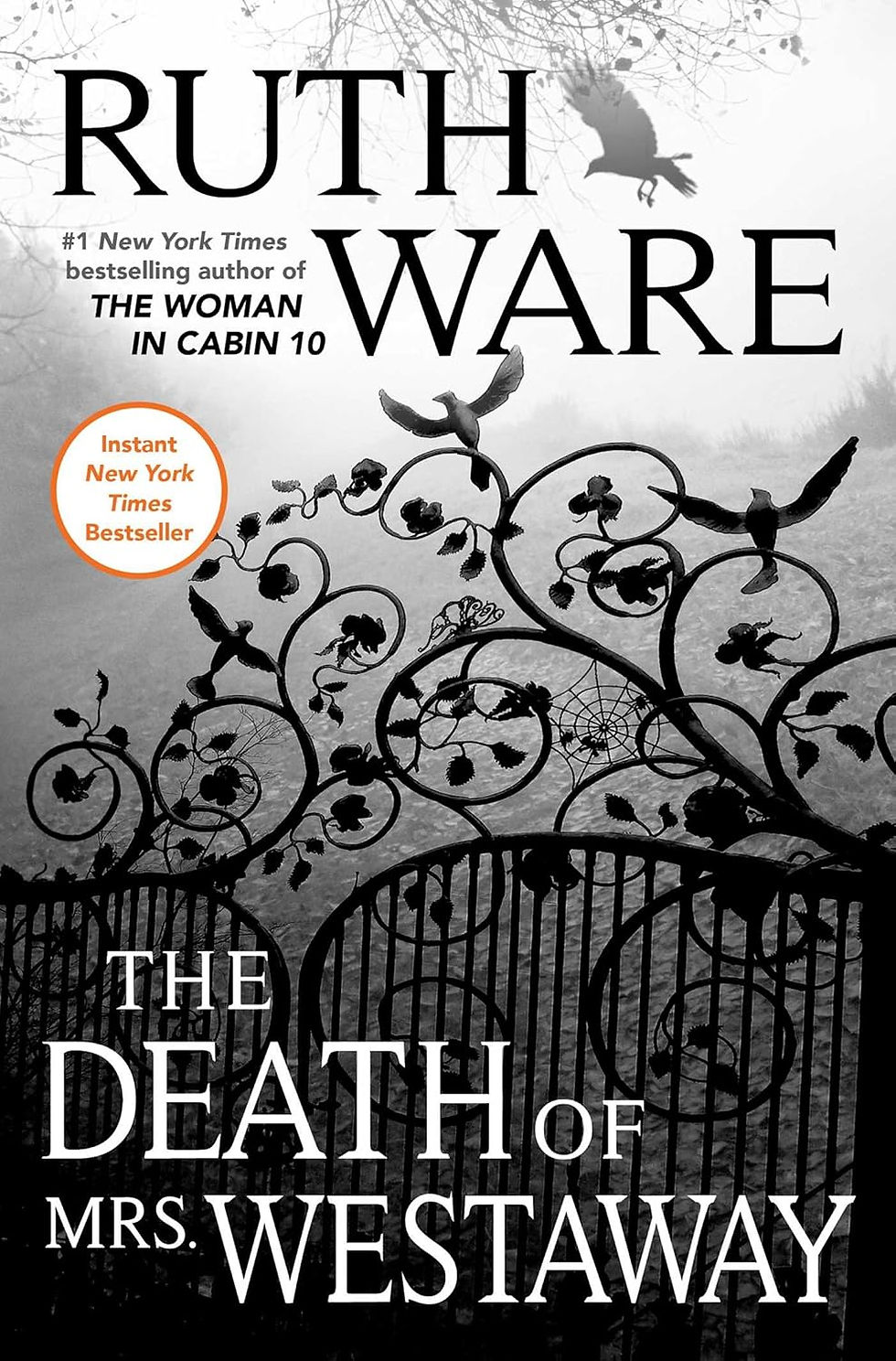
Fans of Emma Cline’s The Girls, Ruth Ware’s The Death of Mrs. Westaway, or Jennie Melamed’s Gather the Daughters will find the same claustrophobic mix of dread, intelligence, and moral decay.
But where others offer catharsis, Marwood offers contamination. Her novel doesn’t cleanse — it infects.
The scariest part of The Poison Garden isn’t the cult. It’s how much of the cult survives in the world outside.
The Poison We Carry
There’s no redemption in The Poison Garden. No rescue, no clean escape.
Only the reminder that belief, once planted, grows in unpredictable ways.
Alex Marwood’s novel is a dark mirror — one that reflects how easily conviction can become control, how family can become doctrine, and how survival can blur into fanaticism.
It’s a chilling, cerebral, and unforgettable addition to the Frightful Reads canon.
A perfect choice for readers who love their thrillers quiet, intelligent, and just a little too real.
The poison isn’t in the soil. It’s in the story.

Comments