


Frightful Reads Friday Exploring the Dark Twists of The Death of Mrs Westaway by Ruth Ware
- Cailynn Brawffe

- Dec 26, 2025
- 5 min read
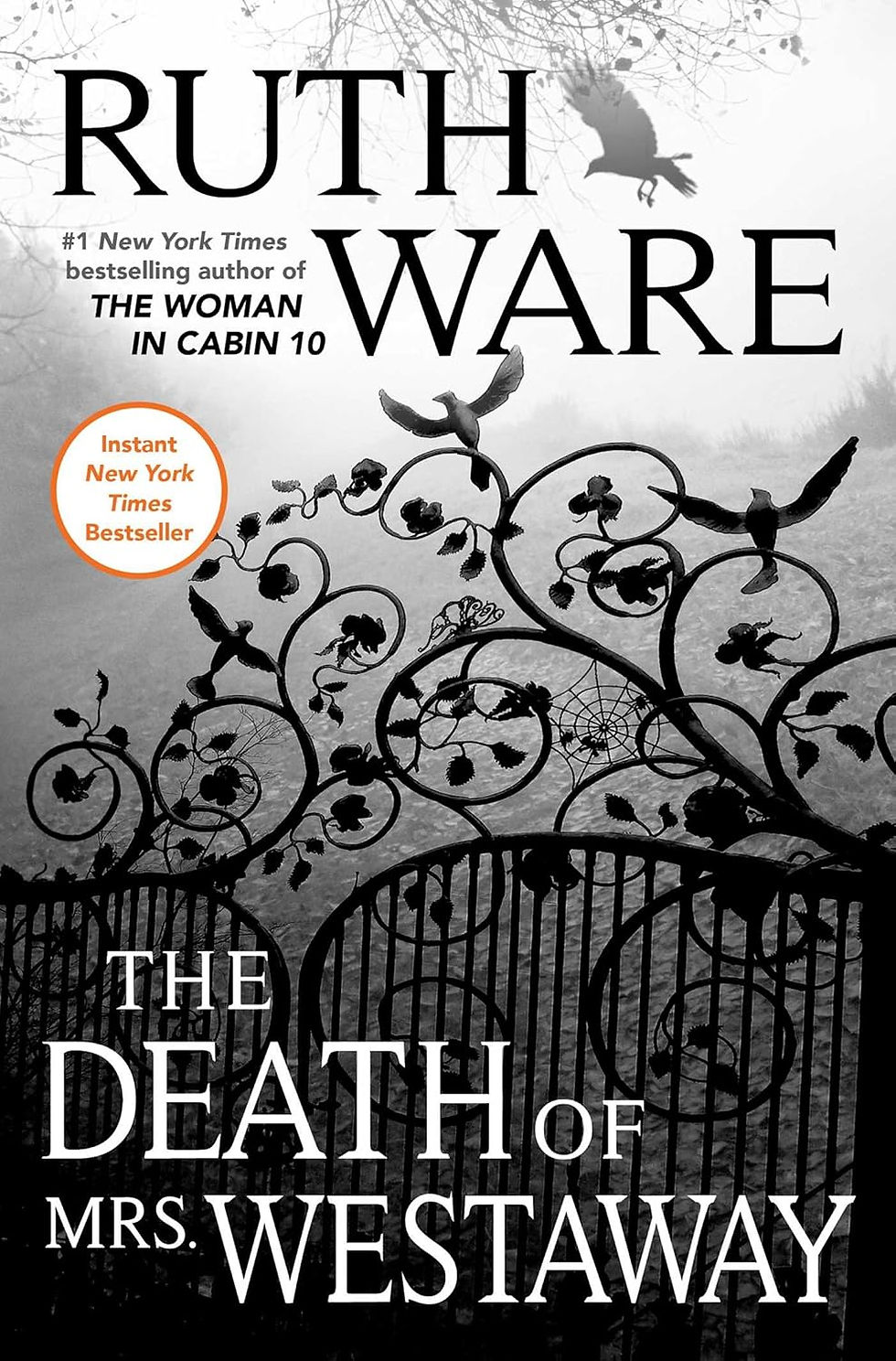
The will was a mistake. But the threat is real.
When a struggling tarot reader receives a letter promising her a fortune, she thinks it’s an error. But the family waiting for her at a crumbling Cornish estate may know more than they’re saying.
The Mystery of Ruth Ware’s Gothic Thriller: The Death of Mrs. Westaway
Published in 2018, The Death of Mrs. Westaway cemented Ruth Ware as one of modern gothic fiction’s most compelling voices.
Part inheritance mystery, part psychological suspense, and wholly atmospheric, this novel channels the ghostly grandeur of Rebecca and the locked-room dread of Agatha Christie.
It’s a story that begins with chance — or perhaps fate. Harriet “Hal” Westaway, a tarot reader scraping by on Brighton Pier, receives a letter claiming she’s the beneficiary of a wealthy woman’s estate. The name matches hers — Mrs. Westaway — but the details don’t.
Hal knows it’s a mistake.
But she’s broke, desperate, and clever.
And so, she decides to go anyway.
That single decision — to accept a lie that isn’t hers — pulls her into a family web spun from secrecy, guilt, and the quiet violence of inheritance.
Ruth Ware doesn’t rely on jump scares or gore. She builds tension the old-fashioned way — through silence, suspicion, and snow piling up at the edges of truth.
Who Was Mrs. Westaway? A Will, a Stranger, and a Secret
The letter summoning Hal to Trespassen House reads like a lifeline: she’s to attend the reading of her “grandmother’s” will and receive a share of the estate.
Except, of course, she has no such grandmother.
Still, Hal’s tarot-trained instincts tell her to play the hand she’s been dealt. Pretend. Observe. Adapt. What she finds when she arrives is not the welcoming hearth of inheritance, but a frozen estate steeped in unease.
At Trespassen House, Ware builds her world with precision: creaking floors, drafty corridors, clocks that tick too loud. It’s gothic fiction for the modern reader — no ghosts required, just grief, greed, and old secrets whispering behind wallpaper.
The house feels alive, watching. The family — polite but brittle — seem to know more than they’ll admit. And as the snow falls, it becomes clear that someone has been waiting for her.
“Ware crafts settings like spells — places that trap you in their silence and make you question your own reflection.”
The Setting of Trespassen House – Snow, Silence, and Suspicion
Trespassen House is more than a backdrop; it’s a haunted organism.
Set on the remote Cornish coast, it feels both endless and claustrophobic — a mansion decaying beneath the weight of family secrets.
Ware uses winter as both atmosphere and metaphor:
The cold isolates.
The snow conceals.
The light fades early, leaving room for ghosts of memory and guilt.
The estate’s empty rooms and shuttered windows recall the best gothic traditions — echoing Jane Eyre, Rebecca, and Shirley Jackson’s The Haunting of Hill House. Yet, Ware’s approach is distinctly modern: the fear isn’t of supernatural forces, but of human nature itself.
Hal’s outsider status intensifies the dread. Every hallway feels like a trap. Every conversation is a test.
And beneath it all, the weight of the will — a legal document, but also a curse.
“Trespassen House is Ware’s most vivid setting — a place where the walls remember and the snow refuses to melt.”
The Family of the Dead – Fortune, Fear, and the Faces of Politeness
When Hal arrives at the estate, she meets the Westaway family — an assortment of relatives gathered under the guise of mourning, though few seem genuinely sad.
There’s Harding, practical and terse; Abel, softer, more haunted; and Ezra, quiet, with the uncanny ability to appear when least expected. Each one seems to know something they won’t say.
The family solicitor, Mr. Treswick, handles the will with formal civility, but even he seems unsettled by the gathering.
Through Hal’s tarot readings — for others, and subconsciously for herself — the novel explores how truth hides behind interpretation. Every card pulled becomes a mirror, reflecting both what she fears and what the family conceals.
The Westaways’ smiles are polite, but their silences are heavy. Ware excels at the subtle horror of etiquette — the way manners can mask menace.
“In Ware’s hands, conversation becomes combat. Every word is a wager.”
The Tarot and the Truth – Fate vs. Free Will
At its heart, The Death of Mrs. Westaway is a novel about fate — or at least, how we explain what we can’t control.
Hal’s tarot readings thread through the novel as both metaphor and method. She doesn’t believe in magic, but she understands how symbols reveal intention.
When she pulls The Tower, she sees not prophecy, but inevitability — a structure collapsing because the truth has been ignored for too long.
Ruth Ware plays with this duality beautifully:
The tarot cards act as narrative foreshadowing.
The inheritance becomes the wheel of fortune — spinning, unstoppable.
Hal herself stands between destiny and deception.
As the lies surrounding her birth and identity unravel, Hal must decide what kind of legacy she’s willing to claim — and what kind she’s willing to burn.
“The cards don’t decide — they reveal. And in this story, every revelation has a cost.”
Why The Death of Mrs. Westaway Is a Perfect Frightful Read
If gothic fiction is about atmosphere, isolation, and hidden sin, The Death of Mrs. Westaway is a masterclass in the genre.
It’s a winter read for those who prefer their chills slow and psychological — more candlelight than carnage.
Here’s why it belongs on your Frightful Reads Friday shelf:
A classic gothic setup — a young woman, an inheritance, a house full of strangers.
A winter setting that isolates both body and mind.
Psychological suspense with moral undertones — what do we inherit when we inherit lies?
A flawed, relatable protagonist who survives by wit, not strength.
For fans of Daphne du Maurier, Tana French, or Louise Penny, Ware’s novel offers the perfect blend of elegance and unease.
“Ware doesn’t need ghosts — she gives us something scarier: family.”
Final Thoughts – Reading Ruth Ware by Candlelight
Ruth Ware’s The Death of Mrs. Westaway is more than a mystery — it’s a meditation on identity and inheritance.
Every card Hal turns brings her closer to the truth, but also closer to danger.
What makes the novel enduring isn’t just its plot, but its texture — the sound of wind against old windows, the flicker of candlelight, the moral chill of deception.
Though it was published in 2018, it feels timeless, as though it could sit comfortably beside the Brontës and du Maurier on any bookshelf.
It’s the kind of story that lingers long after you close the final page — not because of what happens, but because of what might still be hidden in the dark corners of Trespassen House.
“Every fortune has a price. And some inheritances are better left unclaimed.”


Comments